CONTEXT
The emergence of the gig economy in the corporate sector is in its infancy. With the pandemic driven upswing in the job changes, rise in entrepreneurial mindset, and ease of working from anywhere, the future of the corporate workplace is all about leveraging the gig force.
Our research, aimed at sharing learnings and creating benchmarks for Leading Practices in leveraging the Professional Gig Economy, will provide insights to organizations on adopting the gig workforce or scaling it in the immediate term – as well as reflections for fundamental changes for the longer term.
This report also provides a rough guide for leaders – to benchmark their practices with other organizations, and potentially adopt some relevant learnings for their own work-force.

Contact us for detailed report
METHODOLOGY
- Surveyed 35+ Senior HR Leaders – CHROs/ Talent Acquisitions Heads of Large Corporates.
- In-depth interviews with HR Leaders – To understand case specific experiences for additional context
- Amalgamated report of survey results and case studies.
EXECUTIVE SUMMARY
We gathered inputs from hiring decision makers in the corporate world on the shift they are seeing in the traditional hiring approach and understood from them how they have been sourcing and onboarding gig professionals, what policies and benchmarks they have set so far and what future needs they see emerging in their organization context for gig-hiring.
The organizations we surveyed gave us an overall outlook on current gig-hiring practices and the extent to which such they have adapted to this new wave. The findings also indicated there being a large scope ahead for formalization of this practice in the large corporates.
The detailed case study interviews helped us dive deep into the situations of gig-hiring when these organizations first adopted it. It helped us understand how decision makers pushed the barriers of traditional hiring and made the systems flexible enough to accommodate this new way of working. They also highlighted to us how need for gig-hiring is making more sense as per current context.
Contact us for detailed report
RESPONSE DEMOGRAPHICS
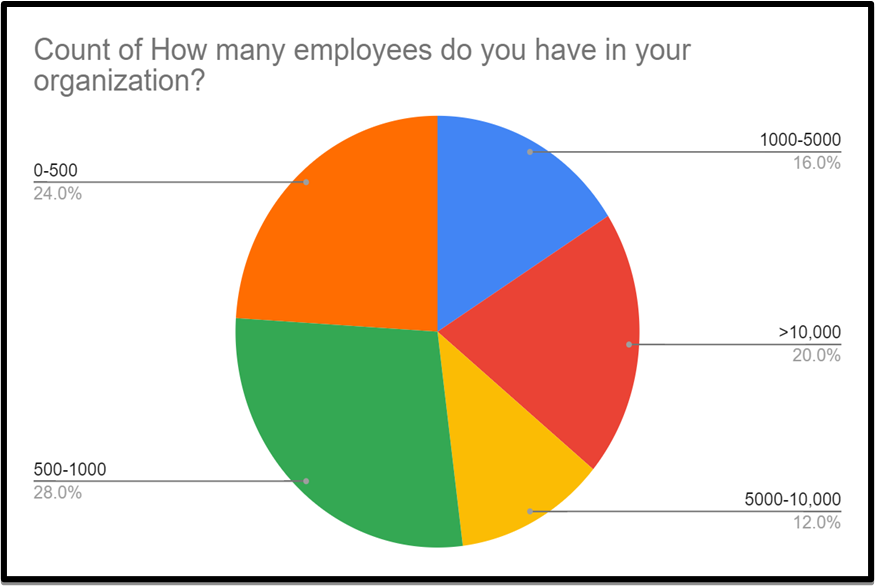
75%+ participants represent large companies with multiple teams and sizeable workforce > 500
.png)
Inputs from decision makers in diverse industries led by FMCG, Health, Professional Services, Infra and Manufacturing.
CASE STUDIES
We interviewed a Leading Agri-Inputs company
Context & Overview:
- The corporation interviewed is a leading Agri-inputs company with presence across Seeds, Horticulture, Bio-Technology & Agri-tech
- They are a pioneer in Hybrid Seeds cultivation
Current Engagement with Freelancers

In-field Farmer Educators

DIgital Tranformation Advisor

CTO for New Digital venture

CHALLENGES
Finding quality freelancers- hiredd largely through word-of-mount reference

EMERGING PRACTICE
Leveraging organised curated plactdorms to access to a wider range of freelancers
- Ongoing operations: They have been engaging gig resources in Finance roles and In-Field Farmer Education
- Specialized Skills: They are also in process of onboarding Tech leaders on consultant mode
We interviewed a Leading MNC Alcobev Company
Context & Overview:
- Leading MNC alcoholic beverages company
- The organization is at early stages of engaging freelance talent for strategic and operational roles
Current Engagement with Freelancers

Managerial & Functional Experts

HR Process Revamp Project

Marketing Analytics Experts

Public Policy & Forensics Experts

CHALLENGES
Rigid established systems, Freelancers perceived as extermal consultants
EMERGING PRACTICE
Clear expectation setting,
Formalized induction process
- Ongoing operations: They have been engaging Managerial and Functional consultants on a gig-hiring model
- Specialized Skills: They are looking for gig-professionals for specialized skills such as Public Policy, Forensic / Anti-Counterfeiting instead of going for permanent hires
The mentioned corporations shared with us the challenges they are facing in operating with this new approach, during onboarding and managing of gig-resources and what potential solutions they adopted to address these challenges.
They also shared how they foresee future needs in this segment or pool of resources and discussed some of the new initiatives that they are planning that would be carried out leveraging gig professionals.
Contact us for detailed report